
Search attractions, restaurants, events...
30 min
Duration
Free
Free entry
Daytime
Best time to visit
Spiritual
Category
The Theologian’s Personality and Scientific Legacy (10th Century)
Abu Layth Nasr ibn Muhammad al-Samarkandi was born in 911 near Samarkand into a family of hereditary jurists. After spending his youth in debates and study in Bukhara and Balkh, he returned to his native city, where for 40 years he headed the college of Muslim jurists, issued universally binding fatwas, and earned the status of Sheikh-ul-Islam of Samarkand.
His contribution to the golden age of Islamic scholarship is recognized as fundamental:
Commentary on the Quran «Bahr al-Ulum» («Ocean of Knowledge»): One of the first and most authoritative complete tafsir compendiums in Central Asia, which became the standard reference for medieval commentators.
Masterpieces of ethics and Sufism: The treatises «Tanbih al-Ghafilin» («Admonition to the Heedless») and «Bustan al-Arifin» («Garden of the Knowers») served for centuries as the principal moral and didactic guides for Muslims of the East.
Legal compendiums (fiqh): The books «Khizanat al-Fiqh» («Treasury of Fiqh») and «An-Nawazil» laid the practical foundation of the Hanafi legal school of Maverannahr.
Crystal honesty: The scholar himself wrote in the preface to his works: "For forty years I issued fatwas in Samarkand... Since I learned to distinguish my right hand from my left, my lips have uttered not a single word of lies, envy, or gossip."
The Historical Mazar and Memorial of Chokardiza
The Sheikh passed away at the end of the 10th century and was buried in the prestigious Samarkand cemetery of Chokardiza, next to his great contemporary Imam Abu Mansur al-Maturidi. In the Middle Ages, this place was considered a sacred necropolis (the "garden of jurists"), where over three thousand recognized scholars and holy men rested. Today, the burial site is part of the protected memorial complex of Chokardiza.
The School of the Abu Laythis and Alisher Navoi
The scholar's descendants founded an influential dynasty of ulema in Samarkand — the Abu Laythis. In the 15th century, the outstanding thinker Khoja Jalaluddin Fazlullah Abu Laythi (the "second Abu Hanifa") taught in their family khanqah and madrasah. It was in this abode that in the 1460s the founder of Uzbek classical literature, Alisher Navoi, lived and deeply studied philosophy, logic, and Arabic poetics, describing his Samarkand mentor with profound reverence in «Majalis an-Nafais» («Gatherings of the Refined»).
Monday: 09:00 – 18:00
Tuesday: 09:00 – 18:00
Wednesday: 09:00 – 18:00
Thursday: 09:00 – 18:00
Friday: 09:00 – 18:00
Saturday: 09:00 – 18:00
Sunday: 09:00 – 18:00
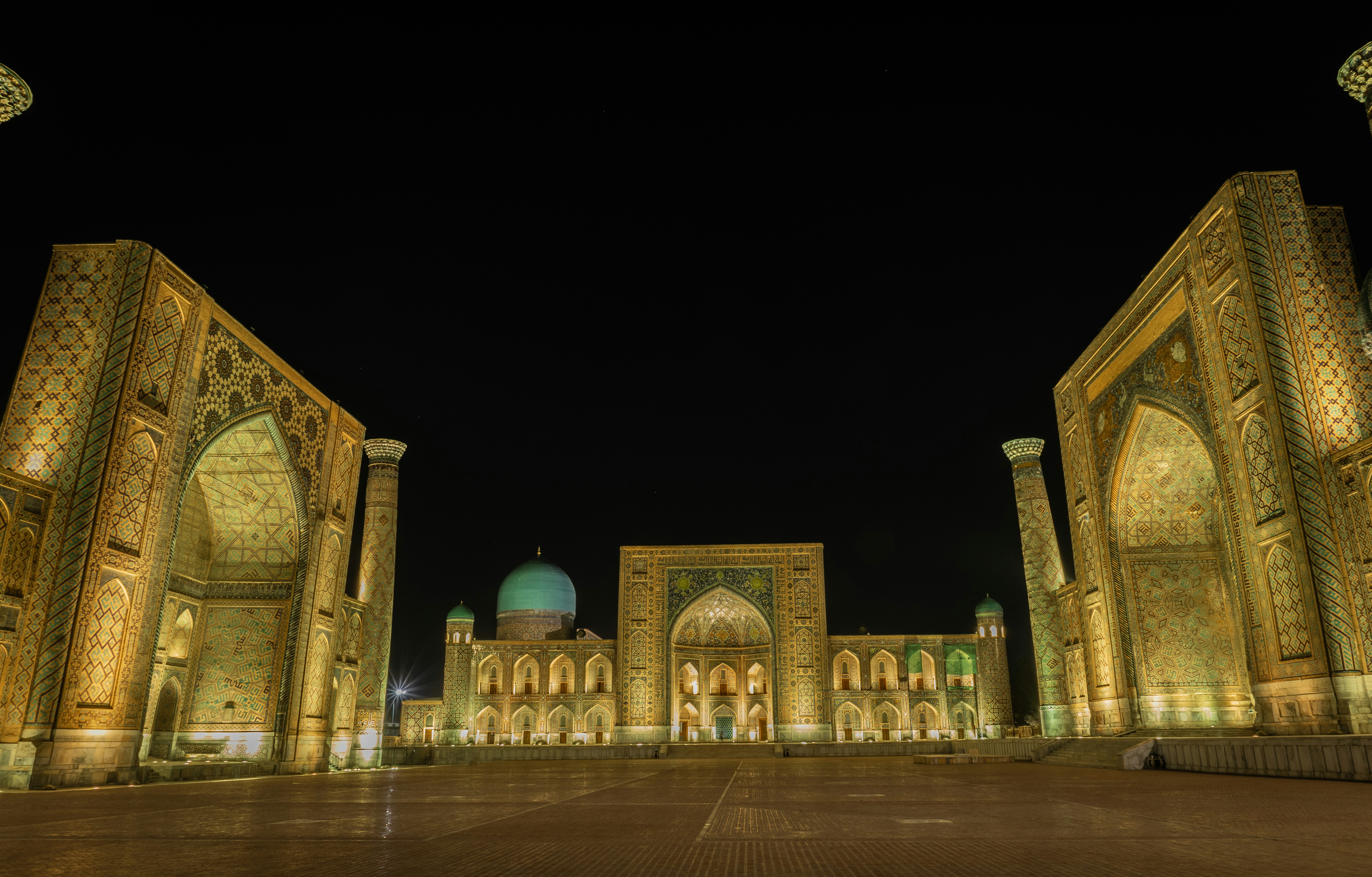
The heart of ancient Samarkand, Registan Square is flanked by three gr…
From 40,000 UZS

Kok-Saray Hill (Samarkand Citadel) is a historic fortress mound in the…
Free entry

Mausoleum and Complex of Imam ad-Darimi — a revered religious-memorial…
Free entry

Memorial complex of Makhdumi A'zam — a revered Sufi architectural ense…
Free entry