
Search attractions, restaurants, events...
30 min
Duration
Free
Free entry
Daytime
Best time to visit
Architecture
Category
Topography and significance of the mound
The Kooksarai elevation (about 725 meters above sea level) rises more than 10 meters above the surrounding Samarkand. This dominant position has made the hill a key fortification hub of the city since ancient times. The ancient Novadon canal flowed along the hill, supplying the citadel with clean water.
Citadel of Amir Temur and the Kok-Sarai Palace (14th–15th centuries)
After Samarkand was proclaimed the capital in 1370, Amir Temur chose this mound for the construction of an impregnable government acropolis:
The four-story Kok-Sarai Palace («Blue Palace»): A grandiose structure with gleaming blue-turquoise majolica tiling, soaring high above the fortress walls. The palace served as the monarch's residence, state chancellery, treasury, and watchtower citadel. In the autumn of 1404, it was from here that Temur set out on his last campaign to the east.
The Bustan-sarai Palace («Palace flower garden»): Located slightly to the south, it was used for ceremonial receptions and the royal family's leisure (in November 1497, Babur stayed there).
The throne stone Kuk-tash — a symbol of supreme power
The main shrine of the citadel was a monolithic carved marble block of gray-blue color — Kuk-tash (Koktash). According to medieval law, a ruler was considered a legitimate monarch of Maverannahr only after, during the enthronement ceremony, clan elders and spiritual leaders raised him on white felt onto the throne stone in Kok-Sarai.
The rite was strictly observed for 500 years. Even after the capital was moved to Bukhara, the Bukharan emirs (Haydar, Nasrullah, and in 1861 — Emir Muzaffar) specially arrived in Samarkand to be crowned on the sacred Kuk-tash stone.
Loss in the 19th century and modern appearance
After Samarkand became part of the Russian Empire in 1868, the citadel was adapted as a garrison fortress. In the 1880s, the dilapidated Kok-Sarai and Bustan-sarai palaces were finally dismantled by the military department, while the sacred Kuk-tash stone itself was preserved and moved to the inner courtyard of the Gur-Emir mausoleum, where it is accessible to tourists today.
In the 20th–21st centuries, the hill was transformed into the ceremonial Kooksarai Square:
Here are concentrated Samarkand's administrative buildings and high-rise dominants;
A shady park has been laid out with one of the country's tallest flagpoles (60 meters);
On the eastern edge of the square, fragments of the historical brickwork of the Timurid palace foundations have been explored and conserved.
Monday: 09:00 – 18:00
Tuesday: 09:00 – 18:00
Wednesday: 09:00 – 18:00
Thursday: 09:00 – 18:00
Friday: 09:00 – 18:00
Saturday: 09:00 – 18:00
Sunday: 09:00 – 18:00
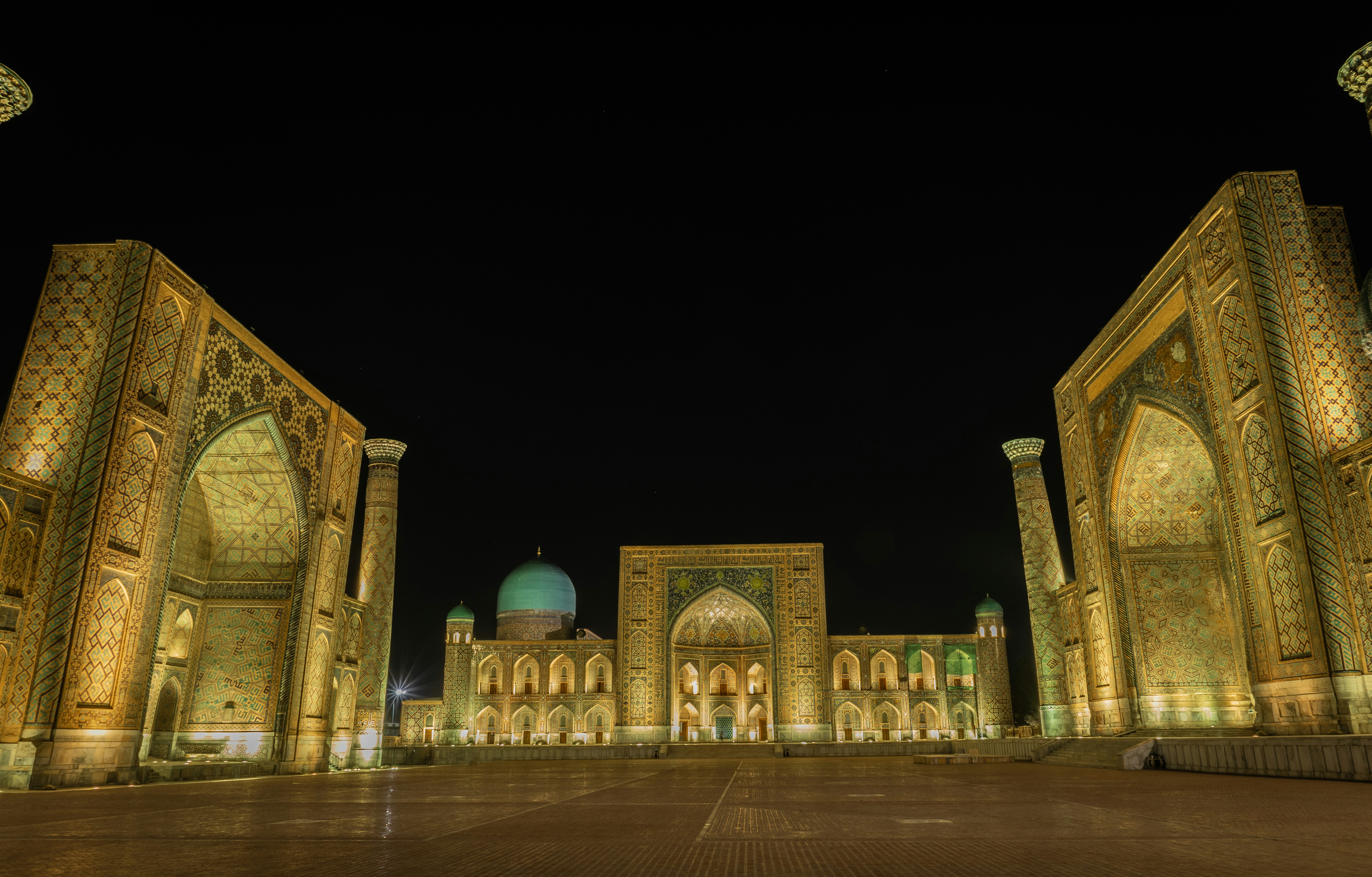
The heart of ancient Samarkand, Registan Square is flanked by three gr…
From 40,000 UZS

Mazar and memorial complex of Faqih Abu Lays Samarkandi is a sacred pi…
Free entry

Mausoleum and Complex of Imam ad-Darimi — a revered religious-memorial…
Free entry

Memorial complex of Makhdumi A'zam — a revered Sufi architectural ense…
Free entry