
Search attractions, restaurants, events...
30 min
Duration
Free
Free entry
Any time
Best time to visit
Architecture
Category
The Legend of "Chupan-Ata the Shepherd-Father"
The name of the site is linked to an ancient folk legend. According to the tale, long before the arrival of Islam, an enemy army approached Samarkand intent on wiping out its inhabitants. The townspeople offered sincere prayers to the Creator for salvation, and that night a huge mountain, carried from Syria, crashed down from the sky onto the invaders' camp, burying the enemies beneath it. In the morning, the townspeople climbed the suddenly risen elevation and found a peacefully sleeping shepherd there. The elder was named Chupan-Ata ("Father of Shepherds") and came to be revered as a righteous man, the deliverer of Samarkand and the patron of cattle breeders.
The hill's geological structure partly confirms the legend: the red slate and clay of the elevation are indeed uncharacteristic of the loess plain of the Samarkand oasis.
The Era of Ulugbek and the Purpose of the Building
In the Timurid era, the hill was called Kuhak. At its foot, Amir Timur laid out the garden of Bogi-Maydan, and his grandson Mirzo Ulugbek built the country palace of Chil-Sutun ("Forty Columns"), the porcelain pavilion of Chinni-Khana, and the famous observatory (1424–1428).
The mausoleum itself on the crest of the height was erected between 1430 and 1440 by the personal order of Mirzo Ulugbek:
Architecture: A central domed structure with a square base and a cruciform inner hall. Above the cubic volume rises a cylindrical drum crowned by a double spheroconical dome faced with azure and turquoise tiles.
The mystery of the structure: Archaeological excavations beneath the building revealed no human remains. This confirms that the structure served as a memorial mosque-cenotaph (kadamjoy) or fulfilled a military-sentinel function as a beacon and lookout point from which the approaches to the city and the fords across the Zeravshan River could be surveyed.
Historical Events and the Present Day
The Battle of 1868: On May 1, 1868, the decisive battle between the detachments of General K. P. Kaufman and the troops of the Bukhara emir took place on the slopes of Chupan-Ata, ending with the annexation of Samarkand.
Restoration: In 2011–2015, the monument was restored: specialists reconstructed the turquoise cladding of the dome and the calligraphic mosaic frieze of the drum.
Monday: 09:00 – 18:00
Tuesday: 09:00 – 18:00
Wednesday: 09:00 – 18:00
Thursday: 09:00 – 18:00
Friday: 09:00 – 18:00
Saturday: 09:00 – 18:00
Sunday: 09:00 – 18:00
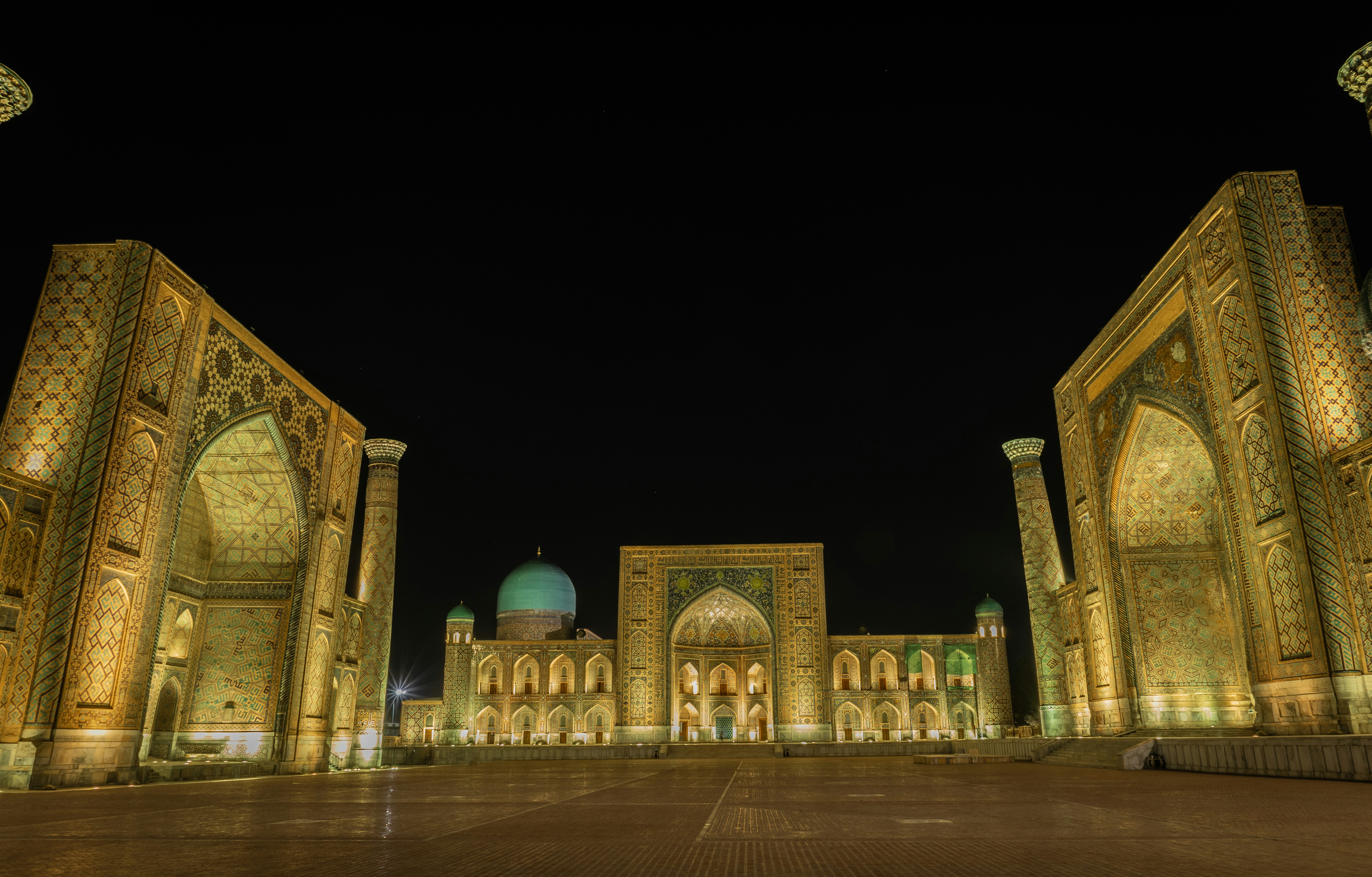
The heart of ancient Samarkand, Registan Square is flanked by three gr…
From 40,000 UZS

Kok-Saray Hill (Samarkand Citadel) is a historic fortress mound in the…
Free entry

Mazar and memorial complex of Faqih Abu Lays Samarkandi is a sacred pi…
Free entry

Mausoleum and Complex of Imam ad-Darimi — a revered religious-memorial…
Free entry