
Search attractions, restaurants, events...
30 min
Duration
Free
Free entry
Daytime
Best time to visit
Spiritual
Category
The personality of the righteous man and the meaning of the name "Darun"
Abd-al Mazeddin, who lived in the 9th century (died around 861), was revered as a scholar of Sharia and the chief city judge (qazi) of Samarkand. Medieval chronicles ("Kandiya") trace his lineage back to the righteous Caliph Uthman.
The word "Darun" is translated from Tajik and Persian as "inner," which emphasized the location of the mazar inside the medieval defensive walls of Samarkand. In contrast, there is the suburban ensemble "Abdi Birun" ("outer"), located to the south beyond the old city ramparts.
History of the complex's formation (12th–20th centuries)
Seljuk period (12th century): The first monumental tombstone and cubic mausoleum over the qazi's grave were erected in the first half of the 12th century by order of the Seljuk Sultan Sanjar.
Timurid era (15th century): During the reign of Mirzo Ulugbek, a spacious portal-domed khanaka (ziyaratkhana) with a tall azure dome on a cylindrical drum adorned with calligraphy and geometric patterns (girikhs) was added to the small mausoleum. During the same period, a hauz pool was dug in the courtyard and plane trees were planted.
Later reconstructions (19th — early 20th century): In 1905, a small madrasah with hujras appeared on the northern side of the courtyard. In 1909, a spacious mosque was erected with an L-shaped summer ayvan decorated with multicolored coffered paintings and ganch carving by Samarkand masters (Sabir Naddjar, Siddik, Abduzahid).
Architectural composition and atmosphere
Inner courtyard: The complex is laid out around a square shady courtyard (25 × 25 m), in the center of which stands a stone octagonal hauz.
Mausoleum and khanaka: In the southern part of the ensemble, a modest whitewashed crypt from the 12th century has survived, along with the richly decorated 15th-century khanaka adjoining it.
Mosque and ayvan: The mosque's ayvan is supported by carved columns of valuable wood species, and its ceiling structures serve as an example of the Samarkand interior school of the early 20th century.
Traditions and folk beliefs
In the folk tradition of Samarkand, a belief has taken root: a sevenfold circumambulation around the tomb of Khoja Abdi on the day of the Kurban Khait holiday is considered equivalent to performing the minor pilgrimage. Unlike the crowded tourist squares of the city, an atmosphere of tranquility and an active spiritual abode is preserved here.
Monday: 09:00 – 18:00
Tuesday: 09:00 – 18:00
Wednesday: 09:00 – 18:00
Thursday: 09:00 – 18:00
Friday: 09:00 – 18:00
Saturday: 09:00 – 18:00
Sunday: 09:00 – 18:00
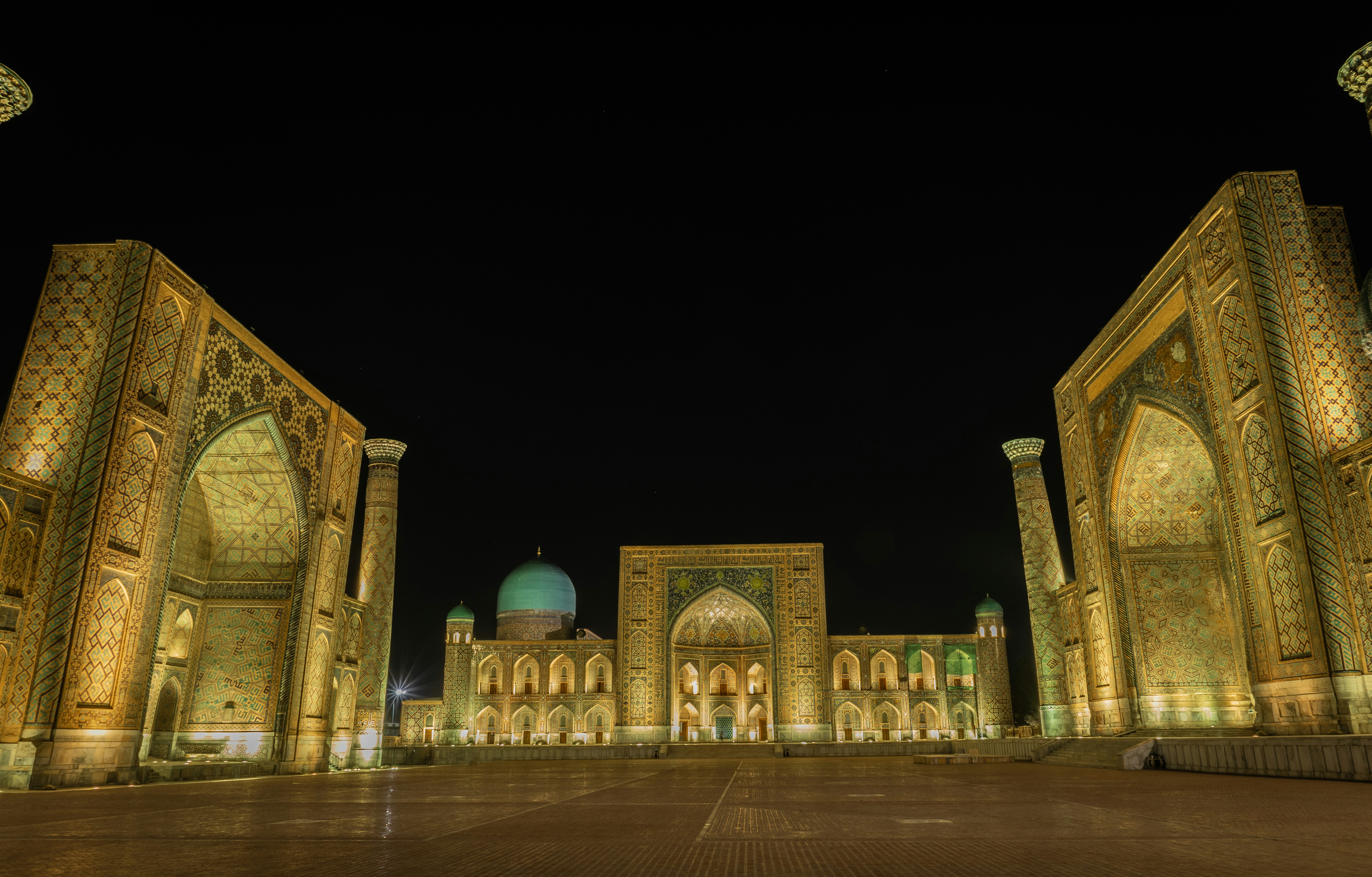
The heart of ancient Samarkand, Registan Square is flanked by three gr…
From 40,000 UZS

Kok-Saray Hill (Samarkand Citadel) is a historic fortress mound in the…
Free entry

Mazar and memorial complex of Faqih Abu Lays Samarkandi is a sacred pi…
Free entry

Mausoleum and Complex of Imam ad-Darimi — a revered religious-memorial…
Free entry