
Search attractions, restaurants, events...
30 min
Duration
Free
Free entry
Daytime
Best time to visit
Spiritual
Category
History of the founding and the idea of the church-school (1903–1905)
By the end of the 19th century the European part of Samarkand was expanding actively: to the south-west of the citadel retired soldiers and settlers formed the so-called Soldiers' (Artillery) sloboda. At that time all the existing churches of the city belonged to the military department and the regiments. The growing peaceful population needed its own civil parish church.
Construction: In 1903–1905, at the intersection of Barbetnaya and Nikolayevskaya streets, the construction of a brick complex began to the design of the architect Ivan Petrovich Lebedev.
Pedagogical concept: The church was built in the mainstream of the reform of church-parish education as a "church-school" complex. The western facade had two separate arched portals: one led into the prayer hall, the second into a three-year primary school for boys and girls.
Benefactors: Church tradition links the financing of the construction to a noble couple — Konstantin and Yekaterina (according to historical research, the funds were allocated with the personal participation of the Ober-Procurator of the Most Holy Synod K. P. Pobedonostsev).
Architectural appearance
Material and masonry: The building is erected from durable light-ochre fired brick on a foundation of large river boulder. The decorative cornices, bands and window frames are laid in figured brickwork.
Bell tower and light: Above the western narthex rises a hipped bell tower with an onion dome and a cross. In 1947, for better lighting of the choir and the altar, original glazed light-and-ventilation lanterns were mounted on the roof.
The church successfully withstood the destructive Samarkand earthquake of October 1907 (only the crowning cross of the bell tower was damaged, promptly restored by the parishioners).
The only surviving church of the city
In the 1920s–1930s, when churches of other confessions and parishes were being closed and destroyed in Samarkand, the Pokrovskaya church remained the only functioning Orthodox centre. The authorities seized two thirds of the adjacent territory for housing, but the believers defended the building itself:
In March 1944 the church was re-consecrated by Archbishop Alexiy (Palitsyn) after the end of the Renovationist schism.
In 1944–1945 the rector of the church was Archimandrite Guriy (Yegorov) — an outstanding church figure, reviver of the Trinity-Sergius Lavra and future metropolitan.
In 1948–1953 the parish was headed by Archimandrite Yermogen (Golubev) (later Archbishop of Tashkent and Central Asia), who built around the church a solid forged fence that has survived to our days (Article about the church on Wikipedia).
Today the church of the Intercession of the Mother of God carefully preserves the historical atmosphere of the early 20th century, ancient icons, and is an architectural monument of Samarkand.
Monday: 09:00 – 17:00
Tuesday: 09:00 – 17:00
Wednesday: 09:00 – 17:00
Thursday: 09:00 – 17:00
Friday: 09:00 – 17:00
Saturday: 09:00 – 17:00
Sunday: 09:00 – 17:00
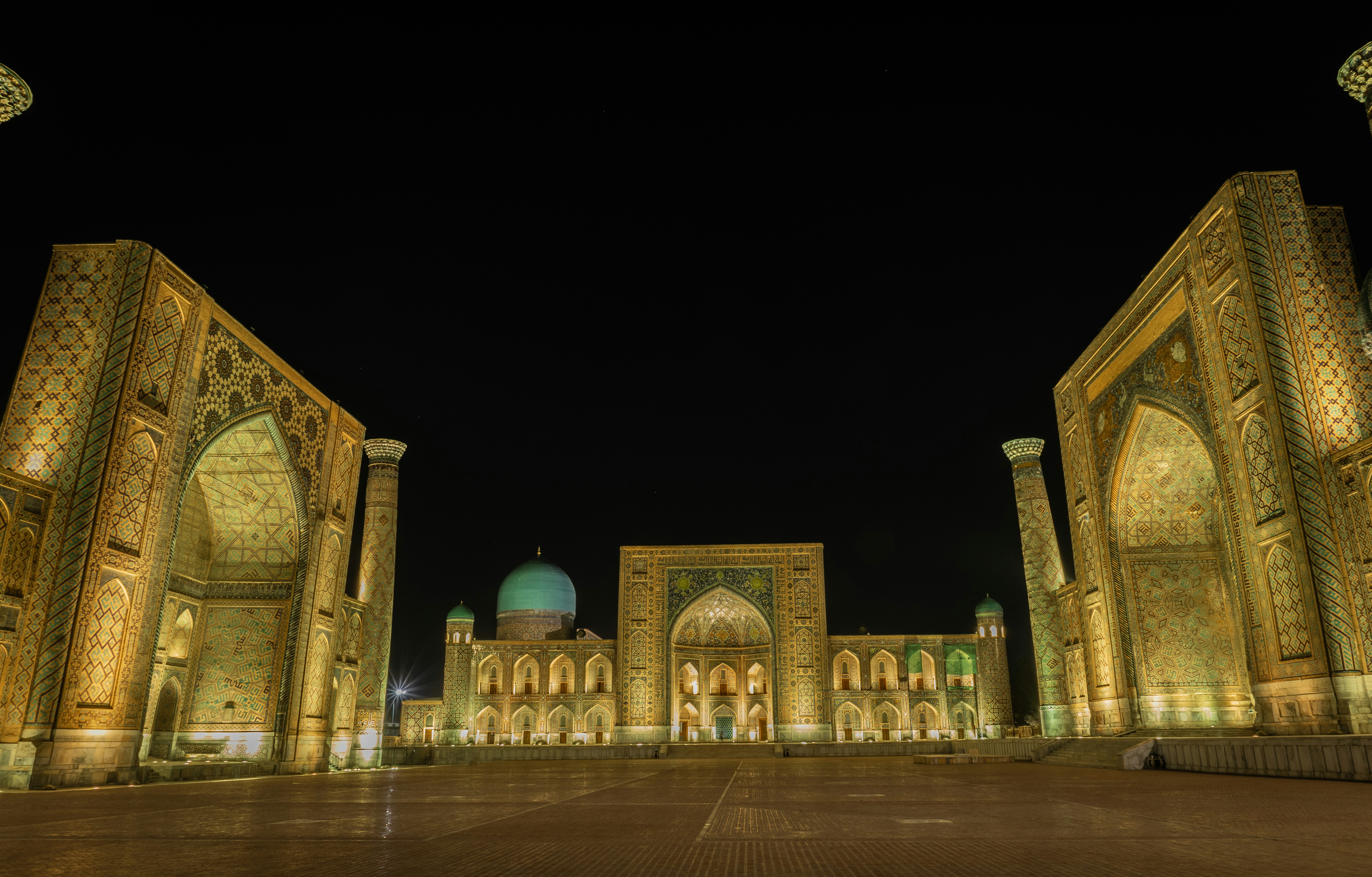
The heart of ancient Samarkand, Registan Square is flanked by three gr…
From 40,000 UZS

Kok-Saray Hill (Samarkand Citadel) is a historic fortress mound in the…
Free entry

Mazar and memorial complex of Faqih Abu Lays Samarkandi is a sacred pi…
Free entry

Mausoleum and Complex of Imam ad-Darimi — a revered religious-memorial…
Free entry